

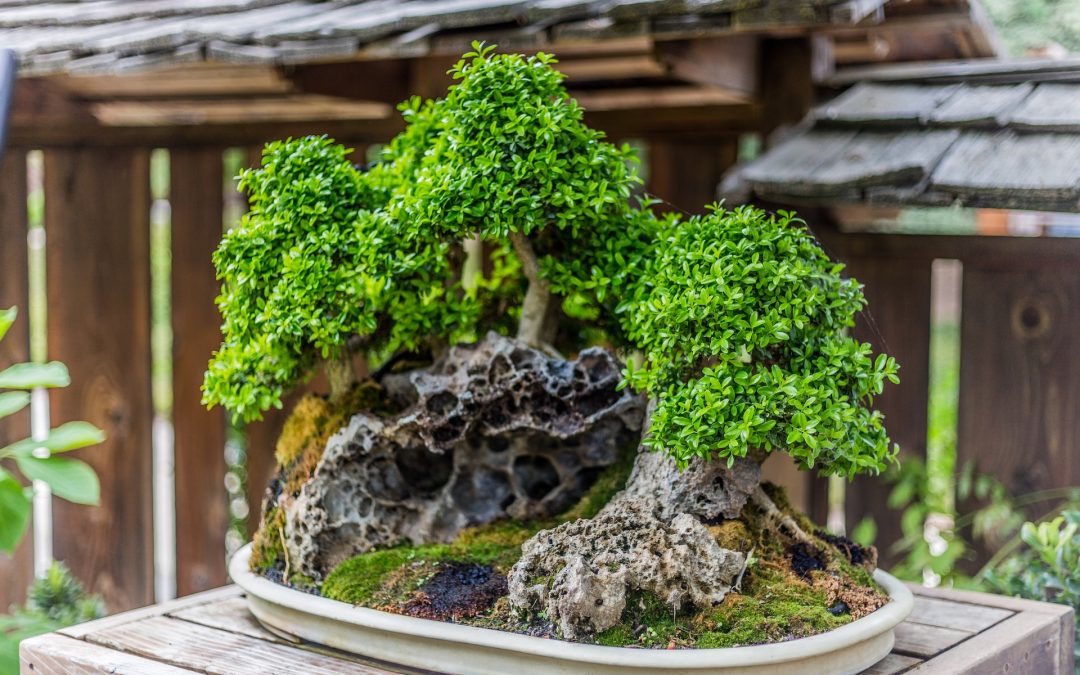
Because they already reside in the circumstances necessary for survival in nature, outdoor bonsai trees require less maintenance than indoor trees. Outdoor cultivation exposes bonsai to all of the climatic conditions, levels of humidity, light, and nutrients required for good growth.
Bonsai Species That Are Ideal for Outdoor Settings
The most straightforward method for growing an outdoor bonsai is to choose a species that would naturally flourish in your region and climate. This obviously varies depending on where you are in the world.Â
There are many outdoor bonsai plants to pick from that are ideal for novices in colder climates. The crab apple, maple, pine, and juniper are some of these species.
A warmer environment might be more conducive to cultivating more subtropical species. Chinese Elm, Olive, and Chinese Privet are just a few examples of these plants.
You should pick to cultivate the bonsai that you like the most, provided you can match the climatic and humidity criteria of the species.
Conditions for Caring for Outdoor Bonsai Trees
Since bonsai trees are genetically distinct from the species that grow in nature, they require a habitat similar to those species to flourish. Due to their confinement in such a little pot, they still need some care because they have access to far fewer nutrients. This can be a serious issue if not taken care of.
The following list outlines the key considerations you’ll need to keep in mind, but it’s worth doing an extra study on the specific species you’re looking to grow.
Watering Process
Various species will require very varying amounts of watering depending on a wide range of characteristics like the soil, age, size, season, climate, and many others. When it comes to watering an outdoor bonsai tree, there is no such thing as a rigid schedule.
Throughout the growing season, it is best to check the moisture content of the soil twice daily, if not more frequently.
Sunlight Requirement
Throughout the year, outdoor bonsai trees require variable amounts of sunlight, which varies greatly by species. Some trees thrive in partial shade, while others flourish in full sunlight.Â
As the amount of light begins to decrease each day in the winter, they will all likely require a period of dormancy.
Look into a species care guide for your specific species to learn where to place your bonsai tree for the ideal quantity of light.
Humidity and Heat Concerns
Outdoor species of bonsai trees typically perform well in various temperatures throughout the year, from low to high. This is in contrast to indoor bonsai trees.Â
For some species, frost can be a major problem, but others can actually handle cold spells quite well. It is worth preserving your bonsai collection from the cold to be safe.
Humidity shouldn’t be a concern if you’re planting an outdoor bonsai tree that can survive in your surroundings organically. Use the humidity tray underneath your bonsai pot by frequently adding water to it to increase humidity.
Conclusion
Choosing a species that thrives naturally in your climate while cultivating an outdoor bonsai tree makes for relatively simple maintenance procedures. If you follow the care directions for the tree, the bonsai will flourish for many years.
Bonsai Shop is ready to assist if you’re looking for bonsai trees for sale in Australia! We deliver bonsai starter kits in Australia and sell pots, tools, and accessories. Check out our ebook and starter kits if you want to grow bonsai trees for yourself!
