

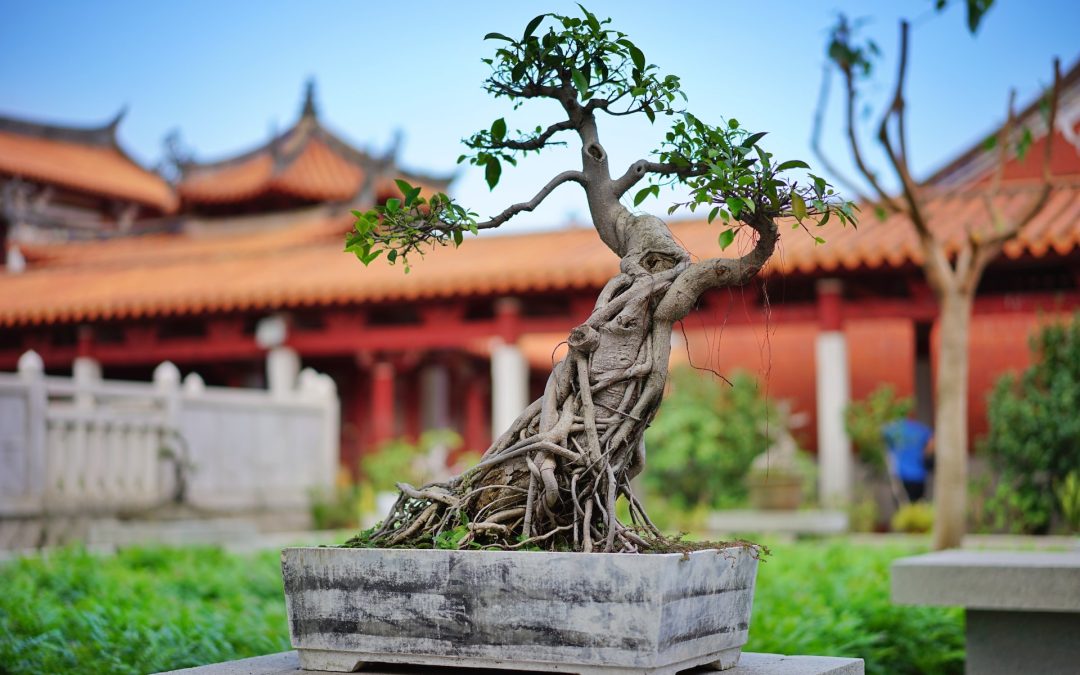
“Bonsai,†often misspelled as Banzai or Bonzai, is a Japanese term for “planted in a container.” This activity originated from the ancient Chinese art of penjing, or growing dwarf trees in containers.Â
The motion due to the bends, twists, and shapes occurring in the tree is one of the most noticeable features. The simplest and most effective method of acquiring movement in the bonsai is through wiring. Bending can also be a good idea if you want to grow a bonsai without the big cut marks on the tree.Â
The trunk is a bonsai’s most noticeable aspect, so applying practical methods is crucial. Here are the seven steps in bending a young bonsai tree’s trunk.
1. Condition the Tree
Allow your tree to sizzle for a day to ensure more malleability. Conditioning your bonsai tree will simplify the bending task and provide a higher success rate. A newly-irrigated tree will easily fracture if you bend it.
2. Find the Right Wire Size
Typically, copper and aluminium wire work best to bend a bonsai tree, but you must have the correct wire size to arc the tree’s trunk. You may use two pieces of wire bruise alongside one another. The goal is to use a wire that measures one-third of the trunk’s diameter. Securely hold the wire by pushing the other end into the soil at the base or right to the lower portion if you use a hollow dish.Â
Firmly hold the wire to the base with one hand while the other coils the wire at a 45-degree angle. After every turn, propel the hand, flexing the wire upwards to create a spiral while it entwines the trunk.Â
3. Embed the WireÂ
Next, embed the wire at a 45-degree angle of two to three inches into the soil at the base. Maintaining the wire’s position at the earth can ensure a compact space between the trunk and the wire.
4. Add Wire to TrunkÂ
Keep attaching the wire at a 45-degree angle until you reach the edge at the high point. You can now cut off excess wiring. Too tight or loose wiring can kill the trunk and won’t bend it to your desired shape.
5. Cut Excess Wire
As soon as the edge of the trunk approaches the apex, you can cut off the excess wire with a bonsai wire cutter to securely cut the wire.
6. Establish Trunk Movement
Your tree is three-dimensional, so you must bend it equally on all sides. Use both hands to turn the trunk, with the thumbs supporting. Establish the shapes as you approach its top. On the other hand, you might need Jin Pliers if you’re dealing with a larger trunk.
7. Wait
After bending the trunk, you must wait three to four months before removing the wires. The best time to eliminate the cables is when the tree trunk wears away into the wire.Â
Small Steps to Growth
The bonsai tree’s trunk is the most noticeable aspect, thanks to the graceful bends and twists. Wiring and bending are effective methods of achieving movement in your plant. Your bonsai trees thrive when you pick the correct wires and angles.Â
Bonsai Shop provides pots, tools, accessories, and bonsai starter kits in Australia if you want to grow a miniature tree at home at your most convenient times. You can also get our e-books to learn about planting strong bonsai trees. Get your bonsai starter kit today!
